Tuesday, February 19, 2013

A Happy Highsmith and a Very Unhappy Flynn

Highsmithic books are enjoyable because rooting for people caught up in difficult circumstances and doing very bad things can be fun.  But if you read too many books in this vein, and start to think about it, it can become too grim.  Like the choppping up of bodies which I just read about, at length, in Natuso Kirino's Out. Now I'm reading Gone Girl by Gillian Flynn. The New York Times Book Review summarizes Gone Girl as "A woman disappears on the day of her fifth anniversary; is her husband a killer?" Is it Highsmithic?  Maybe.  Many reviews have mentioned Highsmith.  To me it seems more Grand Guignol than Highsmithic.  And invariably (it now seems) we get to a section where two volunteers on a search campaign looking for Amy Dunne (the titular gone girl) casually discuss the most likely way the husband got rid of the body - dumping it in the Mississppi River.  But one argues that you'd have to chop it up first, but then one wonders if the body parts wouldn't get stuck and wash up or how far would they flow before washing up.  And I thought to myself, maybe this is all a bit too much.  We can't always be talk about disposing of bodies like this.  After the detailed and technical discussions of how to dismember a body in Natsuo Kirino's Out, I think I need to read lighter fare.  On the whole, Gone Girl is an amazingly thrilling and venomous book with, perhaps, the world's two most unreliable narrators.  I thought it was a tremendously en
tertaining read and I can see why it was the fourth best-selling book (in print and e-book formats) in the US in 2012.  (Any guesses what the number 1,2,&3 best-selling books were?  For bonus points, what was number 9 and how did it relate to numbers 1,2&3?)

Which brings me to Alys, Always by Harriet Lane.  I read it because I heard good things about it.  This is hard to say without potentially spoiling the book but Francis Thorpe is scheming to insert herself into the Kyte family.  Specifically into the arms and bed of Laurence Kyte, a prominent English literary novelist whose life she enters when she comes to the aide of Kyte's wife, Alys, after a terrible automobile accident.  Part of the suspense is that we don't know what Frances Thorpe will do to do it or to what end this is all for anyway - but Thorpe (stop reading - spoiler) uses her dark deeds for a relatively benign purpose, a sort of nice, mild suprise ending.  Alys, Always ends more like Jane Eyre/Charlotte Bronte than Patricia Highsmith.  Think, Reader, I Married Him instead of Reader, I Dismembered Him (which is where I was worried the story would go).  And you know, it was refreshing and different.  She just wanted a certain life and seized upon an unusual way of achieving it.  And they all lived happily ever after.  And the only death was the car accident which starts the book.  And I went and double-checked, Francis does not cause the accident that starts the books (a would be wicked twist that I had been on the lookout for all along).

Wednesday, February 13, 2013

Kate Atkinson and Going to the Dogs Again


The last time I started a Kate Atkinson novel, I got a dog.  I just started reading her new novel, Life After Life, and once again, I'm thinking about dogs.  (And food. There is a lot about food in this book.  Strange food, I think: Egyptian pudding, beef collops, scrag-end, ham and pickles, beef tea, picalilli, sweat meats, meat pies, herring roe on toast, bloater paste sandwiches, lemon curd sandwiches, seed cake, pork pie, steak pie, Rose Madder, Jewish dietary restrictions, Hitler and pastries, and a lot of other stuff.  I guess I don't know much about what the English ate in 1910 but I have a hunch the food in this book is not normal.  Or that that way of eating has died out.  Or that it is supposed to tell us something.)

Early on, the Todd family get a dog to live with them at their house, Fox Corner, in the English countryside.  A French mastiff.  So I put down the book (Kindle in this case), and started Googling French mastiffs because I didn't know what they looked like.  Turns out, they are beautiful.
If I didn't live in downtown Washington, this would be the dog for me.  Instead, I will keep this guy:


In a bit of a coincidence, my dog and I watched the second night of the 2013 Westminster Kennel Club Dog Show tonight.  We missed the toy dog category (the one with Shih Tzus) but got to see the working dog group and the terrier group.  The French mastiff in the competition - or the Dogue de Bordeaux - was a handsome fella but he did not win his category.  The Portuguese Water Dog did.  I also learned that the Great Pyrenees, another member of the working dog group, was declared the "Royal Dog of France" by Louis XIV in 1675.
I know just the person who could use one of these.

Monday, February 04, 2013

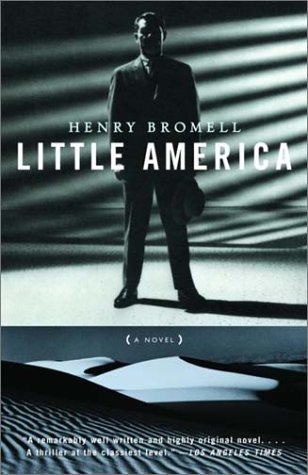
Homeland and Little America

Just as I have innumerable books waiting to be read, I also have several television series that I need to watch.  This past week, I finally started watching Homeland.  I know Homeland is a huge hit now and everyone has seen it so that I should watch it now and write about it is, I realize, well after all the horses have left the barn.  But I knew about the show before it premiered two seasons ago and thought it was going to be something worth watching.  Of course, I never got around to watching it.

What I can't believe was ten years ago, I read a great piece in the LA Weekly by John Powers on the novels of JG Farrell.  (Really - you should go read it.) (Side Note:  I have a bookshelf dedicated to writers with the initials J"X" - I have JG Farrell, JG Ballard, JM Coetzee, JR Ackerley JF Powers, and JF Federspiel.  It amuses me to no end.)  The thrust of the review is that Americans are not very good at writing about empire - which is unfortunate because there is so much material to be expolited.  One notable exception, according to Powers, was a new novel called Little America by Henry Bromell.  At the time I was more concerned with JG Farrell and didn't buy a copy of Little America for a few years and then let it sit unread for a several more years.  But I did start to read about Bromell and found out that he was also a TV writer/producer.  He was one of the producers of Homicide: Life on the Street (or the cop show in Baltimore that David Simon did before The Wire, greatest work of television ever) and a bunch of other shows.  So even though I had not read Little America, I was pretty impressed by Bromell.  And then I heard that he was producing a new series for Showtime called Homeland, and I thought, gee, that should be pretty good, I should watch it.  And with the way things work around here, two years later I am now watching Homeland.

Yes, Homeland is amazing.  So good that I decided to start reading Little America.  It, too, is amazing.  "A remarkably well written and highly original novel.  A thriller at the classiest level." - Los Angeles Times.  I agree.  Little America is the story of CIA involvement in a fictitious Middle Eastern country in the 1950s told through the attempt of the son of a CIA officer to understand what happened to the country (which has vanished) and his family (who were stationed there).  The jacket copy references Graham Greene and John Le Carre.  I would throw in the storytelling chops of William Boyd.  I can't believe this book isn't better known. I hope the success of Homeland spurs some interest in this novel.

I have no idea if it is possible to effective brainwash a person.  I know it is a popular subject in books and movies but I'm skeptical that it could really happen.  Part of Homeland concerns whether or not a captured and tortured US Marine could be turned into a terrorist who would then carry out a mission once back in the US.  So I was thinking about this when I pulled a copy of The Holland Suggestions by John Dunning off the shelf (where it has been patiently waiting for years for the right time to reveal itself to me) to determine whether or not it should go into storage.  John Dunning was a reporter and writer who became a used bookseller and then later wrote some mystery novels about a cop turned used bookseller turned private eye.  Okay, I know that sounds terrible.  Most vocational inspired mystery novels are terrible and completely implausible.  But his first book, Booked to Die, was fantastic.  It was a good crime novel and it was about the book world.  (Um, I can't remember the plot - it came out in 1992 - but I really loved it.  Because I love mystery novels and because I love book collecting.  It worked.)  And the book was a fairly big hit.  At some point I bought an ugly book club edition of one of Dunning's early novels because I wanted more Dunning.  That book was The Holland Suggestions, published in 1975.  Which, of course, I never read. Until now, that is.  Because I realized that the book is some sort of thriller about hypnosis and the power of post-hypnotic suggestion.  When Jim Ryan (Jack Ryan was apparently taken) was in college, he fell in with a rogue professor who experimented on his students.  Something happened and it shattered his life and cost him his wife, leaving him to raise their daughter on his own.  Now, some 15 years later, something is triggering strange actions in Jim Ryan and he is forced to dredge up the past again.  Not helping matters is that his daughter now looks exactly like his wife (and may be secretly communicating with her).  I can't say for sure if this book will be good - it has potential and reads like somewhat of a wordy P.M. Hubbard.  And I probably shouldn't let it distract me from Homeland and Little America, but for some reason I fell compelled to keep reading now.


UPDATE:  Henry Bromell just died.
Saturday, January 19, 2013

Highsmithic?

Auctorial descriptives like Dickensian, Kafkaesque, and Orwellian are easily understood literary adjectives - most people know what these words mean even if they have never read Dickens, Kafka, and Orwell.  There are many other good ones - Joycean, Pinteresque, Proustian, and Ballardian.  But two things I've stumbled upon recently have had me thinking about Patricia Highsmith and what the auctorial descriptive for her would be (and what it would mean).

I just finished reading Out by Natuso Kirino and it is very Highsmithian - or Highsmithic.  Out is the story of four Japanese women who work the night shift in a boxed lunch factory.  One abused woman strangles her husband and the other three help to get rid of the body.  By chopping him up and packing him into 53 plastic bags.  And disposing of the parts in and around Tokyo.  Even though Yayoi has a compelling reason to kill her husband, she is a murderer.  And her three friends aid and abet the crime by butchering him in a bathroom.  So we are essentially following or rooting for flawed, guilty, or bad characters - which seems to be a common theme in Patricia Highsmith's books.  Tom Ripley, Guy and Bruno in Strangers on Train, to name a few.

In Out, much is made about how hard it is to dispose of a human body.  Or to do it well, so you don't get caught.  It reminded me of Tom Ripley's troubles getting rid of bodies in Ripley Under Ground.  Ripley kills a visiting American art collector in the wine cellar of his home in France (while he has a houseguest) and almost farcically has to drag the body up the stairs and across his property to bury it.  Then he has to go back and dig it up and dump it in a river.  And later on, Ripley has to dispose of another body in the Austrian countryside.  He tries to burn it.  But he botches the cremation.  The women in Out do a better job but have similarly difficult time.  And I rooted for both to succeed.  While I have not settled on a good definition of Highsmithic (which I prefer to Highsmithian - I like the -mythic sound), I'd say Out is Higmsithic.  There is much more to the story - the butchering and disposal of the abusive husband is just the start of things.  At times, the suspense and horror in Out were nearly unbearable.  An awesome book, I can't believe it took me almost eight years to read it.

There is a TV show on the ABC Family channel called Pretty Little Liars that I also think is somewhat Highsmithic.  (The show is blantantly Hitchcockian - the references to Psycho have all the subtlety of a hand grenade.)  The series follows what happens to four teen girls after their friend Alison is murdered and after a prank blinds another girl. A shadowy figure known as A torments the girls via text messages and dirty tricks.  The girls try to solve the murder of their friend and unmask A.  If I were a teen girl I would probably think this is the greatest thing on TV.  My wife is a big fan of the show and that is how I came to watch it.  We were watching some old episodes to prepare for the start of the show's winter season when I noticed at the start of an episode that Nate is holding and reading a copy of Patricia Highsmith's The Blunderer.  Nate  has already stalked and killed Maya (who is Emily's love interest) and is now targeting Emily (one of the titular Pretty Little Liars).  He does so by going after Paige, Emily's new love interest.  I haven't read The Blunderer so I don't know what plot elements the show is using from the book but I bet they are there.

And I guess this is a sign that I should read The Blunderer sometime soon.  Perhaps after I finish Grotesque, Natsuo Kirino's follow up to Out.  And now that I have this idea about the Highsmithic in my head, I wonder what else is out there?

Sunday, December 30, 2012

My Year of Reading


My Year of Reading

Achievement of the Year:  I finished reading all of Donald E. Westlake's/Richard Stark's Parker (and Grofield) novels.  I started reading the series in March 2010 and I finished Breakout, Nobody Runs Forever, Ask the Parrot, and Dirty Money in September 2012.  I'm glad I read NRF, ATP, and DM one after the other as they pretty much could be one big Parker novel.  It was a great run.

Archeological Find of the Year:  Donald E. Westlake's Tucker Coe novels.  Even though I love pretty much everything Westlake does, for a long time I wanted nothing to do with Tucker Coe.  I'm struggling to find a rational reason for this.  I dislike the name Tucker Coe.  I think that has a lot to do with it.  But Existential Ennui started writing about Coe and all of a sudden I had to have these books.  So I bought crappy copies of all five books and devoured them.  Why were they so good?  I think it has something to do with the warmth Westlake handled all of his characters.  Kinds of Love, Kinds of Death was about mobsters.  Murder Among Children was about hippies.  Wax Apple about mental patients.  A Jade in Aries about gays.  And Don't Lie to Me about artists.  These subjects are all easy targets to make fun of but Westlake is largely sympathetic to all of them - and these books are from the  mid 1960s to early 1970s, when I think general attitudes were far different than they are now.  And Mitch Tobin, the former New York City cop turned reluctant private eye is so damaged by his infidelity and the death of his partner that he is reduced to building a fence in his yard or excavating his basement as coping mechanisms.  I did not expect to enjoy these books as much as I did. Wonderful stuff.

Country of the Year:  Japan.  I've read a lot of Swedish crime novels the past few years (including the early part of 2012) but I rediscovered Japan this year.  I've been reading more manga (Osamu Tezuka, Yoshihiro Tatsumi and Naoki Urasawa mainly) and this sent me looking for Japanese fiction.  I read and loved The Devotion of Suspect X, Salvation of a Saint, and Naoko by Keigo Higashino, Pro Bono by Seicho Matsumoto, and the short stories of Haruki Murakami.  I am working on Out by Natuso Kirino right now.

Book of the Year:  I have a terrible confession to make about this one.  I own thousands of books.  We rented a storage unit in August and I've started to put most of my books in storage (but don't feel too sorry for me, I still have a few thousand at home).  But I do not own a physical copy of my book of the year, Maria Semple's Where'd You Go, Bernadette.  I read it on my Kindle.  I was reading about this book in the New York Times and decided that I had to have it at that very instant.  So I got it for my Kindle and never got around to picking up a physical copy.  I saw copies but they weren't first editions.  And not only did I love reading the book, I had a lot of fun talking about the book.  My wife read it, too, and we spent weeks asking each other if we'd seen Bernadette anywhere.  Lots of silly text messages about this, too.  I know this behavior sounds silly but boy did we have fun.  (What wasn't fun was that she read the book in a day or two and it took me two weeks.  She read 90 books this year.  And whenever she asks me how many I've read, she always wants to know if they were all picture books -what she calls my comics and manga- or not.)

Other Notable Highlights:  The Twelve by Justin Cronin, Standing in Another Man's Grave by Ian Rankin, Broken Harbor by Tana French, and Pocket Kings by Ted Heller.

The Books I Got for Christmas:

Message to Adolf (Vol.1) by Osamu Tezuka, New York Drawings by Adrian Tomine, The Hive by Charles Burns, a set of Peanuts Moleskine notebooks, About Love by Seth and Anton Chekhov, and A Drifting Life by Yoshihiro Tatsumi.

And a bonus photo:
My interpretation of EE's best books of the year list.

Sunday, December 23, 2012

Holiday TV :(

Why isn't there anything good to watch on American television during the xmas season?  In the UK, you can watch special made for xmas specials of some of the best shows.  I wish I were a Doctor Who fan - watching the xmas special on xmas seems like it would be the perfect end to the day.  I've failed to take to Downton Abbey - but if I were a fan, I'd watch the xmas episode.  Even Call the Midwife is more interesting to me than what is on offer in the US.  Here, where we have three or four hundred tv channels, the programming primarily consists of reruns of every crappy movie with the words Christmas or Santa in the title.  (Home Alone and Elf seem to be the only two acceptable holiday movies on American tv.)  Even when a regularly aired American television series does a Christmas episode, they run it weeks before Christmas.  Castle did its xmas episode the first week of December.

Here's a brief listing of what passes for holiday programming on American television:

December 24:
Shrek the Halls
A Star for Christmas
A Christmas Wedding
Its A Wonderful Life
The Santa Clause
The Santa Clause 2
The Santa Clause 3
Home Alone
Miracle On 34th Street
Bad Santa
A Christmas Carol (with Jim Carrey)
The Family Stone
Surviving Christmas
The March Sister at Christmas (contemporary version of Little Women)
MTV - Teen Mom marathon
Firefly marathon
A Christmas Story
A Christmas Carol (with Patrick Stewart)

The Family Stone is a good movie but I've seen/heard it a dozen times.  Including yesterday.  I would like to see the episodes of Firefly that I've missed - but that's not going to happen on Christmas Eve.  I feel bad for those who end up watching a Teen Mom marathon.

December 25:
How the Grinch Stole Christmas
Home Alone
National Lampoon's Christmas Vacation
Anything But Christmas
A Christmas Kiss
Hitched for the Holidays
Joyful Noise
Merry In-Laws
The Big Bang Theory - marathon
Santa Santa Santa
CSI-North Pole
Law & Order-The Naughty List
The Santa Christmas
A Holiday Called Christmas

Nothing good here.  I've been working my way through The Big Bang Theory and while I would watch a marathon of it on Christmas, I would end up by my lonesome if I did.


I do plan on watching the Outnumbered xmas special.  And the made for TV movies of the Ian Rankin novel Doors Open and the William Boyd novel Restless.  Boyd was on Front Row recently and the interview was so good that in a major about-face I am looking forward to reading his James Bond novel in 2013. I have already watched a BBC Four rock doc on Slade which I think was considered special holiday programming.  Slade are relatively unknown in the US.  I saw a video they did when I was a kid in a hotel in Luxembourg and I thought they were cool.  And then I stumbled across a BBC Three sitcom called The Visit in 2007 that used a Slade song for its theme music.  (That was a great, but short-lived show.  It was a sitcom set in a prison in Manchester and most of the action was set around visiting hours when the inmates would sit in a large room and be visited by their families.  It felt more like a play than a tv show.  I liked the northern accents, too, even if it was a bit of work to understand everything.) So I have had this heretofore unfulfilled yearning to know more about Slade and in general, I love watching these BBC music docs whenever I can catch them.  Its a shame we can't have something similar here.  (Even the series Rock of Ages from a few years ago that was rebroadcast here had to be massively edited because of rights issues to the music covered.)

I shouldn't complain too much about not having good tv to watch on the holidays.  We have a ton of good dvds to watch and the ability to stream tv and movies via the internet.  We do have the complete dvd box set of The Shield and that is something I know from past experience makes for perfect holdiay viewing.  And I know we will watch a Christmas episode of Curb Your Enthusiasm - the one where Larry David mistakes the Christmas cookies made for a nativity scene to be animal cookies and gets into trouble for eating the baby jesus.  Best joke ever.

Friday, December 21, 2012

Rebus, the A9, and Dangerous Scotland

I just finished reading Ian Rankin's new Rebus novel, Standing in Another Man's Grave, last night and I loved it. I love Rankin so much that I had to order a copy from the UK - I couldn't wait for the American edition.  Rebus has come out of retirement to work on a cold case squad and is soon digging into a series of abductions along the A9 road out of Edinburgh.

I was in the mood for more Scotland so I grabbed Under the Skin by Michel Faber.  I loved The Crimson Petal and the White and have been meaning to read Under the Skin for the past ten years and recently even more so before the movie comes out, so now seemed like a good time.  Plus, because of some remodeling around here, a bunch of my Scottish fiction is in the kitchen (don't ask) and it was easy to grab. (Side Note: I also grabbed a Denise Mina I've been struggling with - Still Midnight.  I've loved all of her books but am having a hard time getting started on this one.)  So I started reading it at lunch today and -coincidence-  discovered that it, too, seems to focus on the A9.  More abductions along the A9.

I've never been to Scotland.  As much as I love reading Scottish crime fiction, the place terrifies me.  I imagine myself stepping off the plane and promptly getting mugged just like in the American tourist scene in Trainspotting.  [Everyone from that movie has done well for themselves since it came out and I see them all the time. No need to list what Ewen McGregor and Danny Boyle have done.  Johnny Lee Miller is now on American television playing Sherlock Holmes in modern day New York.  Kevin McKidd plays a doctor on Grey's Anatomy. Robert Carlyle is now playing Rumplestiltskin under a lot of make up on Once Upon a Time.  Kelly Macdonald is on HBO's Boardwalk Empire.  Keith Allen has a daughter.  Peter Mullan is a director.  Spud is the only one I haven't come across anywhere.]

While we don't have Boxing Day here I am looking forward to watching ITV's version of Ian Rankin's 2008 art heist novel Doors Open.